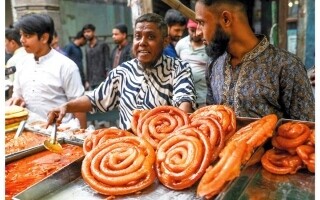
With the arrival of the holy month of Ramadan, the daily life in Bangladesh, particularly in the capital Dhaka, takes on a unique character. The streets and markets pulsate with a special spirit that blends worship, work, and the warmth of family gatherings. From the afternoon hours, an unusual activity begins in the local markets, as fasting people flock to purchase items for their iftar meal. The scene is a mix of the aroma of spices, the voices of vendors, and the hustle of shoppers. Iftar tables in Bangladesh are a significant social occasion, where traditional dishes like 'beguni' (fried eggplant slices) and 'chana' (spiced chickpeas) are served, alongside various local sweets, dates, and cold drinks. As the Maghrib call to prayer approaches, footsteps quicken in the narrow alleys, and many people hurry to return home or head to mosques to break their fast collectively. This image reflects the desire to seize the blessings of the month, as well as the spirit of community and solidarity. After iftar, the mosques fill with worshippers performing the Maghrib, Isha, and Taraweeh prayers. Rows of worshippers extend in the courtyards of large mosques and in residential areas alike. The Ramadan nights become a time for family visits and gatherings, while some markets remain open late into the night to cater to the population's needs. Ramadan in Bangladesh is a season when the values of solidarity and mutual support are strengthened, with charitable initiatives distributing iftar meals to the needy and communal feasts being organized in poor neighborhoods.